Roof Leak Water Damage in Orlando: What to Do Inside Your Home
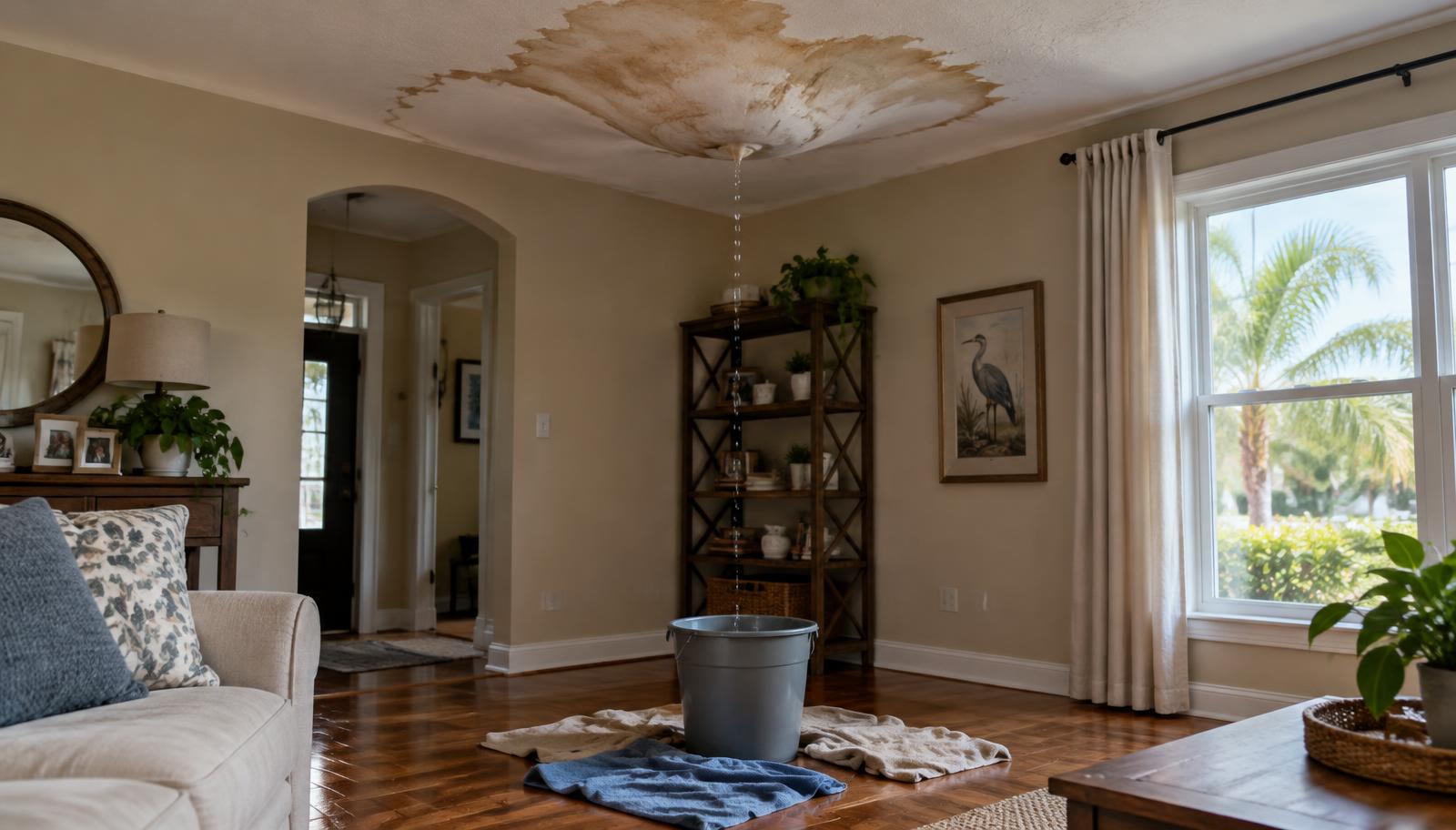
It often starts with a small brown ring on the ceiling after an afternoon storm. A week later the ring is bigger, the paint is bubbling, and there's a faint musty smell in the room. Roof leak water damage in Orlando is sneaky because the water you can see is usually the last part of the story. By the time it drips through drywall, it has already soaked roof decking, insulation, and framing on its way down. Getting the roof patched matters, but drying out what's already wet inside your home matters just as much. That's where water damage restoration comes in.
This guide covers what to do when you first notice a leak, the signs that water has spread farther than it looks, and why Central Florida homes need a careful drying plan after a roof leak.
What to Do First When Your Roof Starts Leaking
Your first job is keeping people safe and limiting how far the water travels.
- Stay out from under a sagging ceiling. A bulging spot can hold a surprising amount of water. Keep kids and pets out of the room.
- Protect the electrical. If water is near a light fixture, ceiling fan, or outlet, turn off that circuit at the breaker panel if you can reach it safely from a dry spot.
- Catch the water. Put a bucket or trash can under the drip and lay towels around it. Move furniture, rugs, and electronics out of the way.
- Take photos. Capture the ceiling, the floor, and any wet belongings before you move or toss anything. Our guide on how to document water damage explains what to record.
- Call a roofer to stop the source. A tarp or temporary patch keeps the next storm from making things worse while the interior is assessed.
Avoid going into the attic during a storm or at night. Walking on ceiling joists in the dark, around wet insulation and wiring, is an easy way to get hurt or put a foot through the drywall.
Why Roof Leak Water Damage in Orlando Spreads So Far
Water rarely drops straight down from the spot where it enters the roof. It runs along rafters, follows the slope of the decking, and spreads across the top of the ceiling before it finds a low point to drip from. That's why the stain on your ceiling may be several feet from the actual leak, and why the wet area above it is often larger than the stain itself.
Orlando's climate adds to the problem. Our frequent afternoon storms can keep feeding a small leak for weeks, and the warm, humid air slows natural drying in an enclosed attic. Insulation acts like a sponge, holding moisture against the drywall below it. It all adds up to a slow, hidden soak that can lead to sagging ceilings, damaged framing, and mold.
Signs the Water Has Traveled Beyond the Ceiling Stain
Look for these clues around the room and the rest of the house:
- Stains or bubbling paint that keep growing after each rain
- A musty or damp smell in a bedroom, closet, or hallway
- Wet, matted, or flattened insulation in the attic
- Dark streaks on the roof decking or rafters
- Peeling paint or soft spots where the wall meets the ceiling
- Swollen trim, crown molding, or window frames near the leak
- Water stains on the walls below, not just the ceiling
Some of these overlap with the signs of a hidden water leak from plumbing. If you aren't sure whether the water is coming from the roof, an AC unit, or a pipe, that's worth sorting out first. Attic air handlers are a common source of ceiling stains too, so read up on AC condensate leaks if your unit sits above the wet spot.
Roof Repair vs. Water Damage Restoration
A lot of homeowners assume that once the roof is fixed, the problem is solved. Those are really two separate jobs.
The Roofer Stops the Water
A roofing contractor repairs shingles, flashing, vents, or decking so water can't get back in. That part has to happen, but it doesn't dry anything that's already wet inside.
Restoration Dries What Got Wet
Water damage restoration deals with the inside of the house. A typical roof leak project may include:
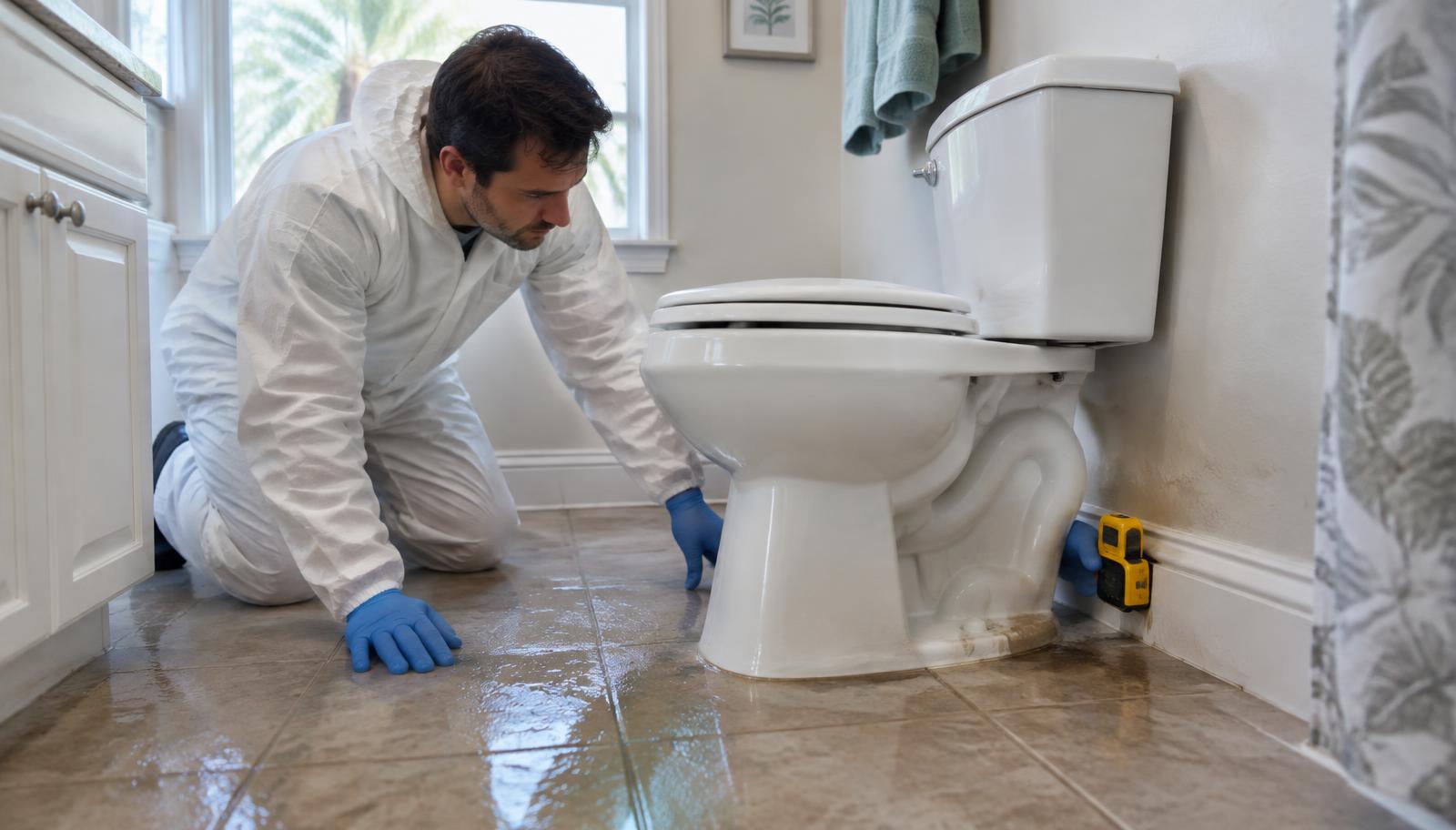
- Moisture readings to map how far the water spread in the ceiling, walls, and attic
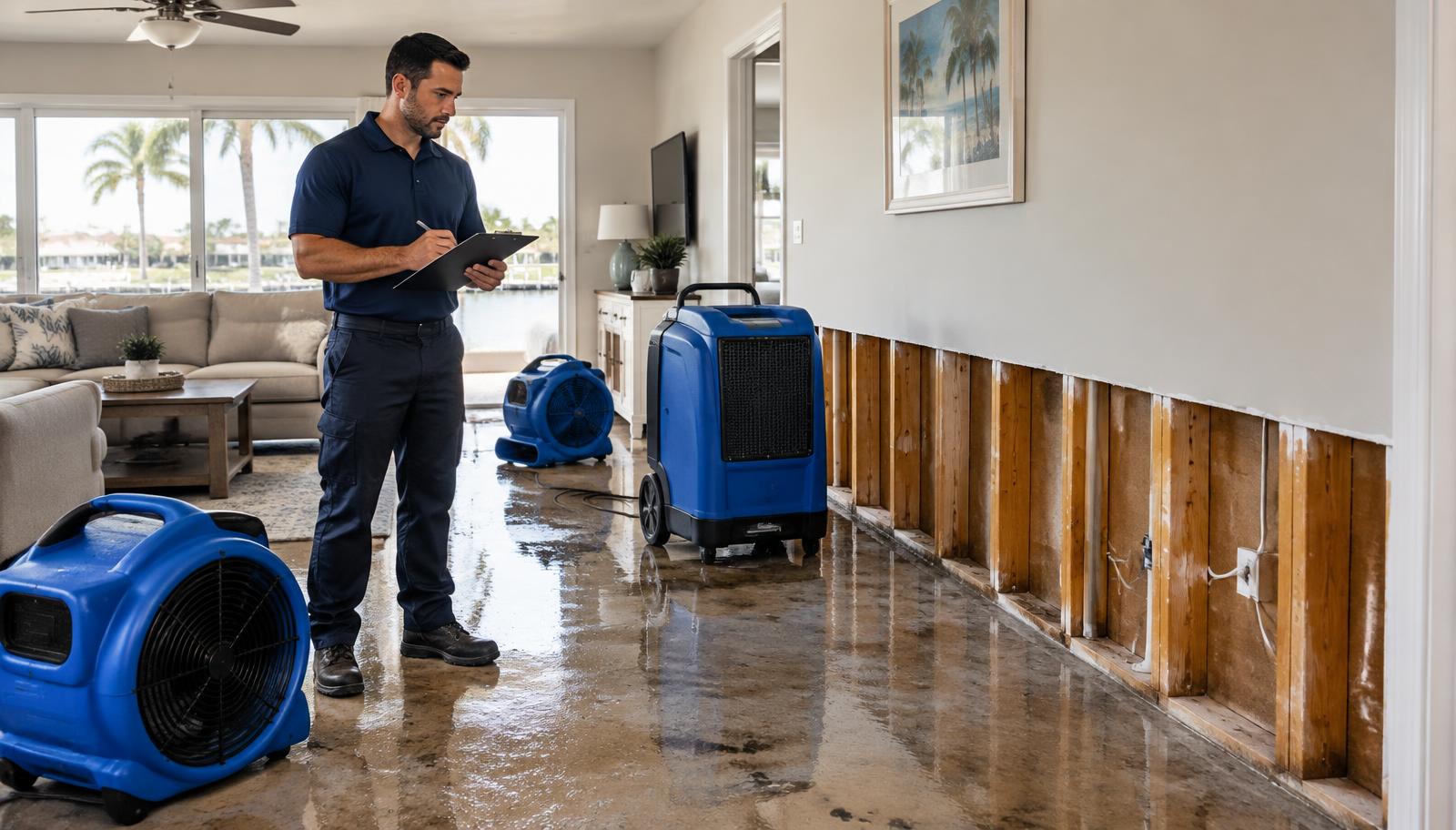
- Removal of wet insulation and damaged drywall that can't be dried in place
- Structural drying with air movers and dehumidifiers aimed at framing and decking
- Antimicrobial treatment where materials stayed damp
- Photo documentation and drying logs for your records
Skipping the drying step and simply painting over a stain is how a small leak turns into a much bigger repair later. Our article on how professional water damage restoration prevents costly repairs explains why.
When a Roof Leak Leads to Mold
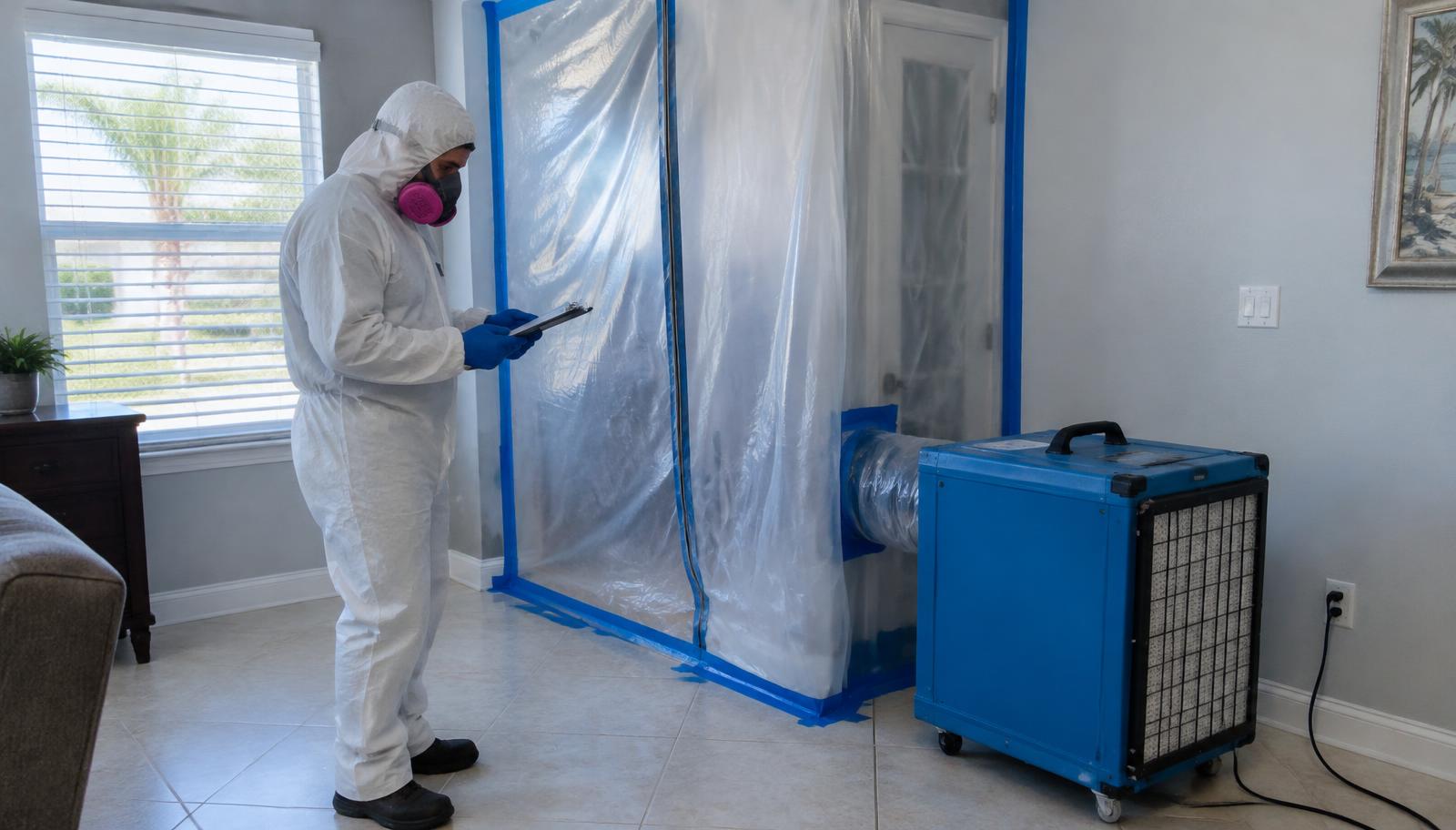
Damp insulation and drywall sitting in a hot Florida attic are an ideal setting for mold. If you notice a musty smell, dark spotting on the ceiling, or discoloration on the roof decking, it's time to have it checked. Here's why mold grows so fast after water damage in Florida. When growth is found, professional mold remediation uses containment so spores don't spread through the rest of the home, and our guide to what's involved in mold remediation walks through each step.
Will Homeowners Insurance Cover Roof Leak Damage?
It depends on your policy and what caused the leak. Some policies may cover sudden damage, like a leak caused by storm winds, while a leak from an aging roof, long-term wear, or deferred maintenance is often treated differently. Mold that follows a leak may be excluded or limited. Every policy is different, so call your insurer to confirm what applies to you. Good photos and drying records help either way. For more on what shapes the scope of a project, see our guide to water damage restoration cost in Orlando, and if a storm is on the way, our hurricane season prep checklist is a good place to start.
Frequently Asked Questions
Can I just paint over a ceiling stain once the roof is fixed?
Not until the area is confirmed dry. Paint can hide a stain for a while, but wet insulation and drywall above it can keep holding moisture, which may lead to sagging or mold later.
Do I need to replace the insulation in my attic?
Often, yes, for the section that got soaked. Wet insulation loses its shape and holds moisture against the ceiling. Moisture readings help decide how much needs to come out.
What if storm water came in through the ceiling and flooded the floor?
Rainwater coming through the roof usually starts out relatively clean, but it can pick up contaminants as it passes through the attic and sits on floors. If floodwater came in from outside or backed up through drains, that's a different situation that may call for sewage cleanup.
Get Help With Roof Leak Water Damage in Orlando
A roof leak is a two-part problem: stopping the water and drying what it touched. Lanstar USA Corp handles the inside of your home, providing water damage restoration, mold remediation, and sewage cleanup across Orlando and Central Florida, including Winter Park, Kissimmee, and Sanford. If you've spotted a ceiling stain after a storm, have the area checked before you patch and paint.
Get Help From Lanstar USA Corp
Lanstar USA Corp serves Orlando and Central Florida 24 hours a day, 7 days a week. If you are dealing with this problem now, call 321-234-0816 or request a free estimate for water damage restoration in Orlando.
Water Damage? Call Lanstar USA Now
Our Orlando-based crew responds in 60 minutes or less — every day of the year. Licensed, insured, and IICRC certified since 2016.