Toilet Overflow Cleanup in Orlando: What Homeowners Should Do
It usually happens at the worst possible moment. You flush, the water starts rising instead of draining, and suddenly it's spilling over the rim and spreading across the bathroom floor. Once the panic fades, the big question is whether this is something you can handle with a mop and some towels, or whether you need professional toilet overflow cleanup in Orlando. The answer depends on what was in the water, where it went, and how long it sat.
This guide walks through what to do in the first few minutes, how to tell a minor spill from a real contamination problem, and the signs that the water traveled farther than it looks.
First Steps When Your Toilet Overflows
Before you think about cleanup, stop the water and protect the people in your home.
- Shut off the water supply. Turn the valve behind the toilet clockwise until it stops. If it's stuck, lift the tank lid and raise the float to stop the fill.
- Keep kids and pets out. Close the bathroom door if you can do it without walking through the water.
- Watch for electrical risks. Unplug hair dryers, heaters, or anything near the wet floor only if you can reach the plug from a dry spot.
- Stop using other drains. If the overflow came from a blockage further down the line, running the shower, sink, or washing machine can push more water back up.
- Take photos. Capture the water, the floor, the baseboards, and any nearby rooms before anything gets moved. Our guide on how to document water damage covers what to photograph.
Is a Toilet Overflow Considered Sewage?
This is the part most homeowners don't realize. Not all toilet water is the same, and the restoration industry treats it differently depending on what it contains.
Clean Tank Water
If the water came from a leaking supply line or a tank that overfilled without anything in the bowl, it may start out as relatively clean water. That kind of spill is usually handled as a standard water damage restoration situation, as long as it's dried quickly.
Bowl Water and Waste
Once the overflow includes water from the bowl, especially with waste or toilet paper, it is treated as contaminated. That water can carry bacteria and other pathogens, and anything porous it soaks into becomes a concern. Our breakdown of Category 1, 2, and 3 water damage explains how these levels are classified.
A Backup From the Main Line
If the toilet overflowed because the sewer line is blocked, you may notice gurgling in other drains, water coming up in the shower or tub, or more than one fixture backing up at once. That points to a larger sewage backup, not a single clogged toilet. In that case, read our guide to what to do in the first hour of a sewage backup and call for help.
When You Can Handle It Yourself
A small, quick spill of clean tank water on tile, caught right away and wiped up before it reaches the walls or doorway, is often something a homeowner can manage. Dry the floor thoroughly, run a fan, and keep an eye on the baseboards and the ceiling below if the bathroom is on a second floor.
Even then, be honest about what you're seeing. If you're not sure whether waste was in the water, it's safer to treat it as contaminated.
When Toilet Overflow Cleanup in Orlando Needs a Professional
Call a professional if any of these are true:
- The water contained waste or came from the bowl
- It reached carpet, a bath mat you plan to keep, a hallway, or a bedroom
- It seeped under the vanity, baseboards, or flooring
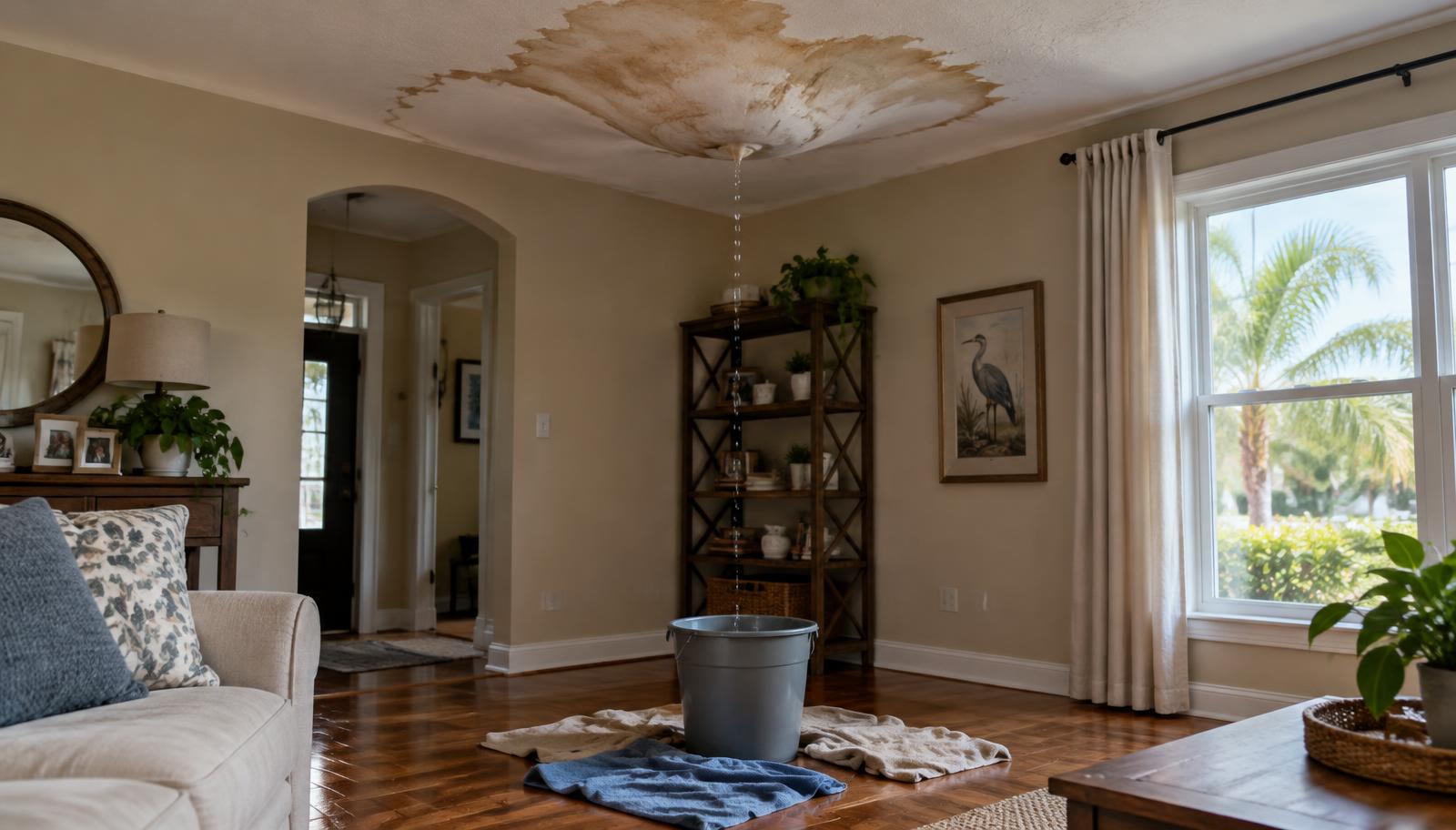
- The bathroom is upstairs and you see a stain or drip on the ceiling below
- More than one drain is backing up
- The floor still feels soft, smells, or looks wet a day later
Contaminated water doesn't stay on the surface. It wicks into drywall, slips under vinyl and laminate, and soaks into the subfloor around the toilet base. Wiping the visible floor won't reach any of that.
What Professional Toilet Overflow Cleanup Involves
For a contaminated overflow, a trained crew follows a process built around safety and finding all of the water, not just the obvious puddle.
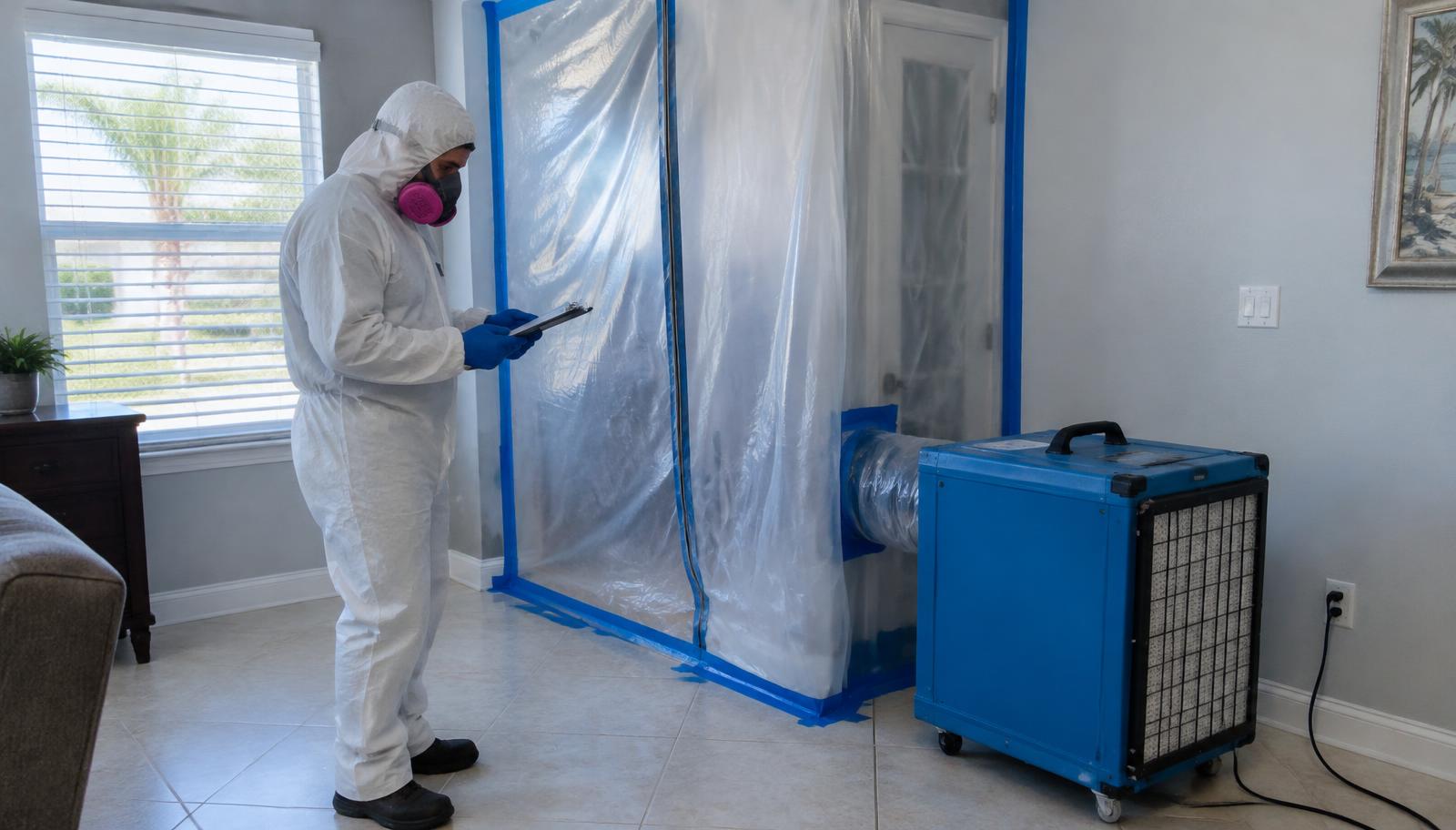
- Protective equipment and containment to keep contamination from spreading to the rest of the home
- Extraction of any remaining water
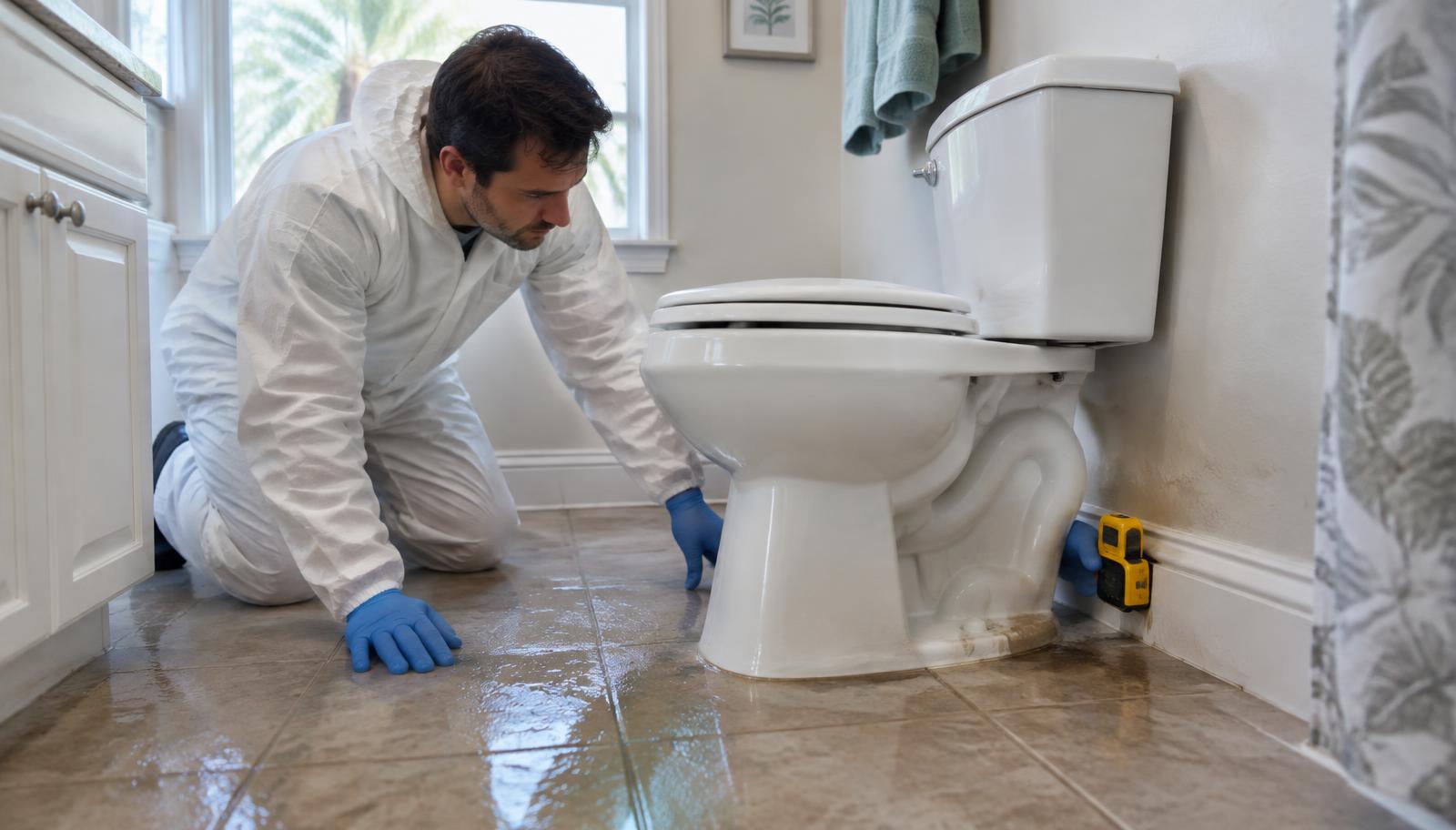
- Moisture readings to map how far the water traveled under flooring and into walls
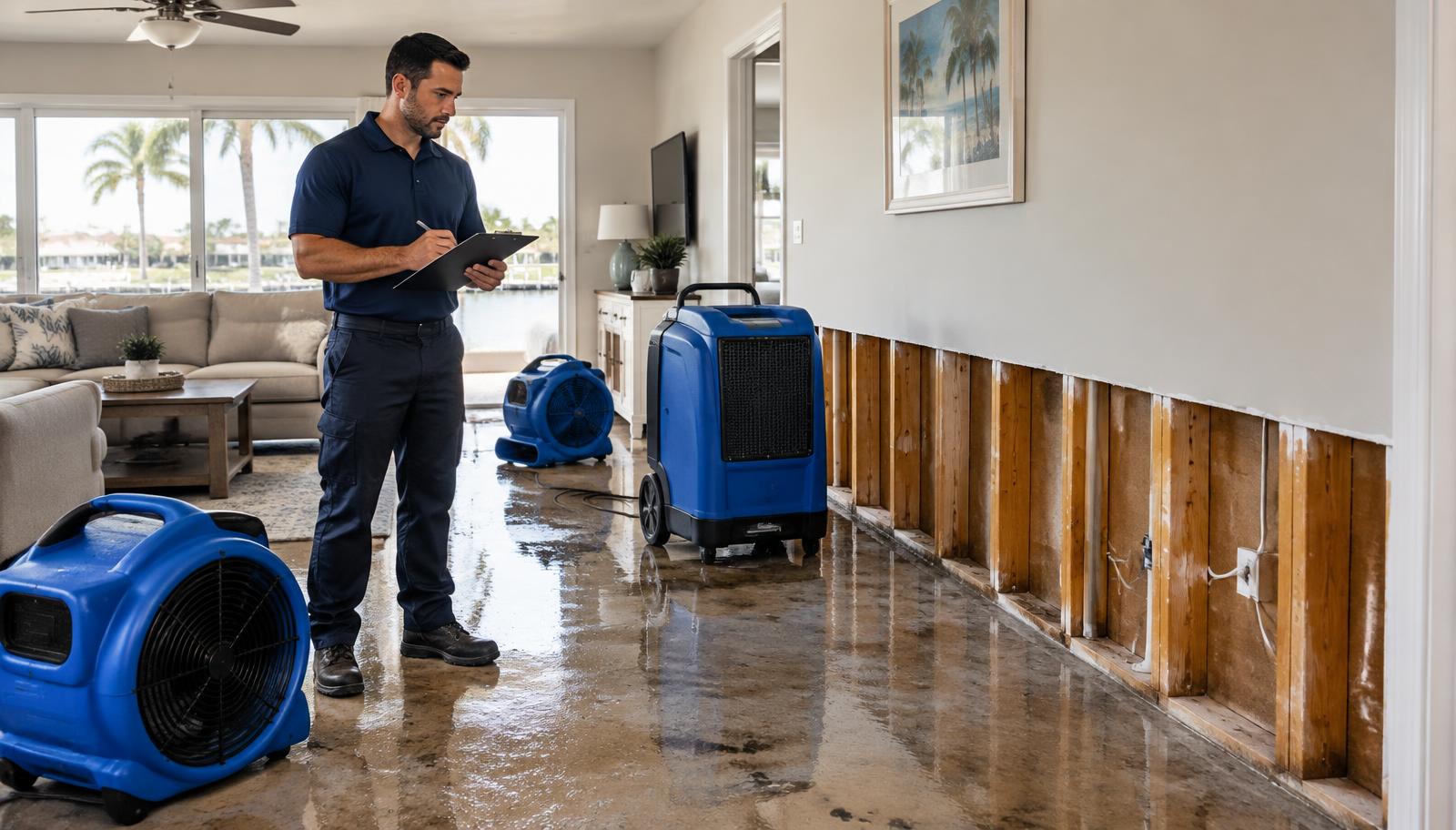
- Removal of affected porous materials such as carpet, padding, or the lower section of drywall when they can't be safely cleaned
- Cleaning and disinfection of the remaining surfaces
- Structural drying with air movers and dehumidifiers
- Odor treatment once the source has been removed
- Photo documentation to support your records and any insurance conversation
If a smell hangs around even after the floor looks clean, that's often a sign something was missed. Here's why sewage odors can return after a backup.
Why Speed Matters in Central Florida Homes
Orlando's warm, humid air slows natural drying, especially inside wall cavities and under bathroom flooring. Moisture that's left behind can lead to swollen vanities, loose tile, and musty odors. Given enough time, it can also turn into a mold problem, which is why some overflow jobs end up needing mold remediation too. Here's more on why mold grows so fast after water damage in Florida.
Slow leaks around the toilet base cause the same issues more quietly. If you've noticed staining or soft spots near the toilet, these signs of a hidden water leak are worth reading.
Will Insurance Cover a Toilet Overflow?
It depends on your policy and the cause. Some homeowners policies may cover sudden and accidental water damage, while sewer or drain backups are often excluded unless you have a specific endorsement. Damage from a long-term leak or deferred maintenance is frequently treated differently. Every policy is different, so call your insurer to confirm what applies to you. For a sense of what drives the scope of a project, see our sewage cleanup cost guide.
Frequently Asked Questions
Can I just use bleach after a toilet overflow?
Bleach can help on hard, non-porous surfaces, but it won't reach water that soaked under flooring, into baseboards, or into drywall. If contaminated water reached those areas, a professional assessment is the safer choice.
Do I need to replace my bathroom floor after an overflow?
Not always. Tile over a dry subfloor can often be cleaned. Carpet, padding, and some laminate or vinyl that trapped contaminated water underneath may need to be removed. Moisture readings help decide what can stay.
What if the overflow leaked through the ceiling downstairs?
Treat the ceiling area as contaminated and avoid standing under any sagging drywall. Water that reaches a lower floor usually means wet framing and insulation in between, which needs professional drying.
Help With Toilet Overflow Cleanup in Orlando
A toilet overflow can be a quick fix or a hidden contamination problem, and it's not always easy to tell which from the doorway. Lanstar USA Corp provides sewage cleanup, water damage restoration, and mold remediation in Orlando and across Central Florida, including Winter Park, Kissimmee, and Sanford. If you're not sure how far the water went, have it checked before replacing anything.
Get Help From Lanstar USA Corp
Lanstar USA Corp serves Orlando and Central Florida 24 hours a day, 7 days a week. If you are dealing with this problem now, call 321-234-0816 or request a free estimate for toilet overflow and sewage cleanup in Orlando.
Water Damage? Call Lanstar USA Now
Our Orlando-based crew responds in 60 minutes or less — every day of the year. Licensed, insured, and IICRC certified since 2016.